


Florida Game Fish Worth Chasing Near Boynton Beach
Florida game fish give anglers a rare choice in the Boynton Beach area: run a few miles offshore for a sailfish or mahi-mahi, work a reef for snapper and kingfish, or stay in protected inshore water for tarpon, snook, and jacks. The best target is not always the biggest fish on the list. It is the fish that fits the season, weather, experience level, and kind of day you want on the water.
South Florida is built for variety. The Gulf Stream runs close to shore, deep structure holds fish year-round, and the Intracoastal Waterway offers action when the ocean is rough or a family wants a more relaxed ride. With the right plan, a first-time angler can catch fish confidently while an experienced angler gets a legitimate shot at a hard-running trophy.
Florida Game Fish Offshore: The Big-Action Targets
Offshore fishing is where Boynton Beach earns its reputation. Productive blue water can be reached efficiently, which means more time with lines in the water and less time running the boat. Conditions change daily, though. Wind direction, current, water color, bait presence, and recent weather all influence where the fish set up.
Sailfish
Sailfish are one of the signature Florida game fish, and for good reason. They are fast, acrobatic, and capable of turning a quiet spread into a full-speed scramble. Winter cold fronts often create strong sailfish opportunities along Palm Beach County, especially when bait is moving and the current lines up. That does not mean every winter day is a sailfish day. A skilled captain watches the water, bait schools, birds, temperature breaks, and current before deciding where to start.
Live-baiting is a proven approach, but it is not simply a matter of putting a bait behind the boat. Proper bait presentation, boat position, drag settings, and clear communication matter when a sailfish eats. For newer anglers, the captain and crew can handle the technical side and coach the fight. For seasoned anglers, sailfish provide the kind of precision fishing that keeps every minute interesting.
Mahi-Mahi, Wahoo, and Tuna
Mahi-mahi are a favorite for families and visiting anglers because they are colorful, aggressive, and excellent on the table. They often gather around floating debris, weed lines, current edges, and areas holding flying fish or other bait. Spring through fall can be particularly productive, but mahi-mahi are not tied to a calendar alone. Clean blue water and available bait are always part of the equation.
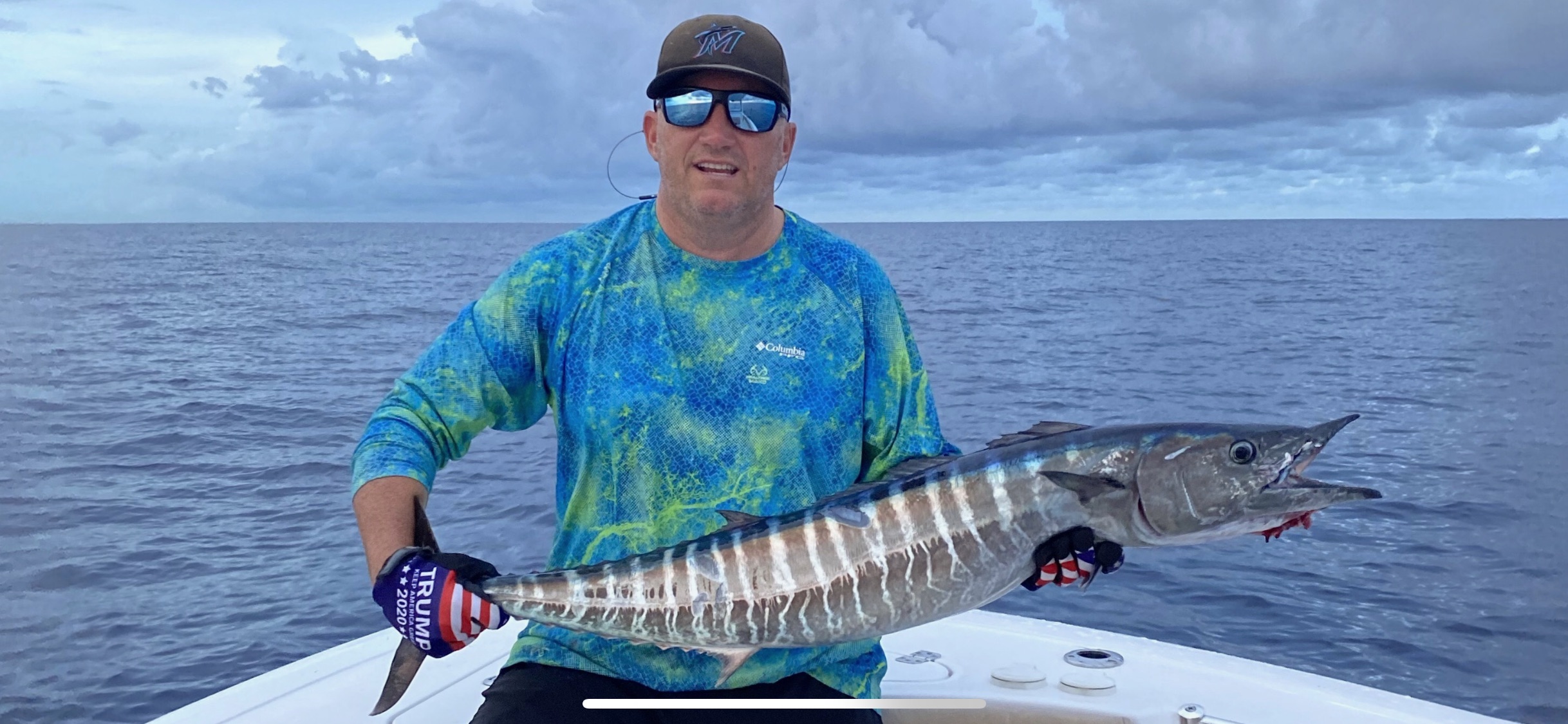
Wahoo are built for speed. A strike can be violent, and the first run often tells you immediately that this is not an ordinary fish. They are commonly targeted with faster trolling presentations, especially around changing conditions, current edges, and offshore structure. Wahoo fishing rewards preparation because a fish moving that fast can expose weak knots, poor drag settings, or a lack of focus in seconds.
Blackfin tuna are another prized offshore option. They may show around bait schools, wrecks, and deeper offshore water, and they can be caught trolling, live-baiting, or with carefully presented chunks and jigs when conditions call for it. Tuna are strong for their size, and a school can give a group multiple shots at fish in a short stretch of time.
Reef Fish That Pull Hard and Eat Well
South Florida reefs and wrecks hold a different kind of opportunity. These trips can combine steady rod-bending action with a chance to bring home dinner, assuming the fish are in season and meet current size and bag regulations. Snapper, grouper, kingfish, amberjack, and other reef species may all be available depending on the day and the area being fished.
Kingfish, also called king mackerel, are a classic local target. They hit live bait hard, run fast, and can provide exciting action without making an extremely long offshore run. Kingfish are a good choice for anglers who want the feel of offshore fishing but may prefer a shorter half-day trip.
Snapper fishing calls for a more controlled approach. The bite can be subtle, and fish on a reef know every rock, ledge, and piece of structure that can cut off a line. Keeping a bait natural and getting a hooked fish away from the bottom quickly is the difference between a fish in the cooler and a story about the one that got back to the reef.
Grouper are another powerful reef target, but availability varies with closures, seasons, and location. They are not a species to promise blindly. A good charter plan stays flexible, targets what is legally available, and uses the conditions to put guests right on the best opportunity that day.
Inshore Florida Game Fish for Light-Tackle Fun
When the Atlantic is choppy, inshore fishing can be the smart move. It is also a great choice for families with younger anglers, first-time guests, and anyone who enjoys casting light tackle around docks, bridges, seawalls, mangroves, and channel edges. Calm water does not mean easy fishing. Inshore fish are often close, visible, and quick to react to a bad cast or poorly placed bait.
Tarpon are one of the most memorable light-tackle fish in Florida. They jump, pull hard, and test an angler's patience at every stage of the fight. Their behavior changes with tide, water clarity, bait, boat traffic, and time of year. Some days they roll in predictable areas. Other days, they seem to vanish until the right tide begins moving.
Snook are another premier inshore target, especially around structure and moving water. They are smart, powerful, and famous for diving into pilings or mangrove roots once hooked. Snook regulations are specific and can change, so anglers should always follow current rules and release fish carefully when required.
Jack crevalle may not have the glamour of a sailfish, but they are one of the best fish for pure action. A school of jacks can turn a quiet inshore stretch into nonstop casting and hard fights. They are especially fun for kids and beginners because they hit aggressively and give anglers a real workout on lighter gear.
Choosing the Right Trip for Your Crew
The right charter length depends on your target and your priorities. A half-day trip is a strong fit for families, first-timers, reef fishing, and anglers who want quality time on the water without committing their entire day. It can also produce offshore fish when conditions and the bite are close.
A three-quarter-day trip gives more room to adjust. If the first plan does not produce, there is time to change depth, switch techniques, move from trolling to live bait, or check a different set of reef areas. For groups hoping to mix action with a shot at a larger offshore target, that extra time can make a real difference.
Full-day trips are best for anglers who want maximum flexibility. More time allows a captain to work the conditions rather than force a quick decision, and it is often the better choice when pursuing offshore species that may be moving farther out. It also gives dedicated anglers time to fish multiple styles in one day, such as starting offshore for pelagics and finishing on the reef if the opportunity is there.
At 4 J's Fishing Charters, trips leave from Harvey E. Oyer Park with a 25-foot Sportsman center-console, professional-grade tackle, and a plan tailored to the people onboard. Captain Jim Chiarenza brings more than four decades of freshwater and saltwater experience to each trip, whether he is teaching a child how to hold a rod correctly or helping a serious angler work a bait through the right current line.
What Makes a Productive Day on the Water
The most successful fishing trips start with realistic expectations. Florida offers outstanding fishing, but no captain can schedule a sailfish bite, make the ocean flat, or guarantee a specific species. What local experience does provide is a better decision-making process. That means choosing a safe route, finding the most productive water available, using the right tackle, and changing the plan when the fish tell you to change it.
Guests can help by sharing their goals before departure. Let the captain know if your group wants dinner fish, big-game action, light-tackle casting, a kid-friendly trip, or a chance at a particular species. Bring sun protection, a hat, polarized sunglasses if you have them, and clothing that can get wet. Most importantly, come ready to listen when the bite happens. A few quick instructions followed at the right moment can turn a missed strike into the fish of the day.
The best Florida game fish trip is not measured only by the largest catch. It is the moment a child feels a first hard pull, a group laughs through a double hookup, or an experienced angler watches a sailfish light up behind the bait. Pick the trip that fits your crew, trust the conditions, and be ready when the rod goes off.


Comments