


Top South Florida Reef Species to Catch Now
A South Florida reef trip can go from quiet to nonstop in one good drift. One minute the bait is settling over structure, and the next a yellowtail snapper is racing for the reef, a kingfish is screaming line off the reel, or a grouper is trying to put you in his home. The top South Florida reef species are close enough to Boynton Beach to make a half-day charter productive, but catching them consistently comes down to putting baits at the right depth, on the right structure, under the right conditions.
The reefs off Palm Beach County hold a mix of great table fare and hard-pulling game fish. Some species feed best on a clean current and a steady chum slick. Others want a live bait dropped tight to the bottom. That is why a local captain's knowledge matters - the same ledge can fish completely differently from one tide, wind direction, or season to the next.
Top South Florida Reef Species Worth Targeting
Yellowtail snapper
Yellowtail are a South Florida reef favorite for good reason. They are beautiful fish, excellent on the table, and challenging enough to keep experienced anglers focused. They can be plentiful around reef edges, wrecks, and hard bottom, but they are also wary. Heavy leader, a noisy boat position, or a bait that does not look natural can turn a good yellowtail bite into a slow one.
The most effective approach is usually a controlled chum slick with small baits drifting naturally well behind the boat. Light tackle makes the fight more fun, but it has to be balanced with enough leader strength for the reef. When the current is moving right, anglers may hook yellowtail steadily while seeing mutton snapper, triggerfish, and other reef fish work their way into the spread.
Mutton snapper
Mutton snapper are one of the prize catches on local reef trips. They grow larger than yellowtail, pull much harder, and have a reputation for eating when a well-presented live bait or fresh chunk reaches the bottom. A quality mutton can make a day for anglers who want a serious dinner fish and a photo-worthy catch.
Muttons often show around deeper reefs, wrecks, and sandy areas beside structure. They can be aggressive, especially near a tide change, but they are not automatic. A mutton may inspect a bait before committing, so patience and a natural presentation count. Once hooked, keep the pressure on. Giving a big mutton a few seconds of slack near bottom structure is often all it needs to break free.
Grouper
Grouper are built for the reef. They hit with authority and immediately head for the nearest hole, ledge, or wreck. Black grouper, red grouper, and other legal grouper species can be encountered on South Florida reefs and deeper hard-bottom areas, depending on the season and the grounds being fished.
This is not usually a finesse bite. Grouper fishing calls for stout gear, strong hooks, and enough drag to turn a fish before it reaches cover. Live baits, large dead baits, and bottom rigs all have their place. The trade-off is clear: heavier tackle may feel less sporting than light snapper gear, but it gives anglers a much better chance of getting a quality grouper off the bottom.
Grouper regulations, seasons, size limits, and bag limits can change, and they vary by species. A responsible trip starts with knowing what is open and what can be kept that day. If a fish is out of season or does not meet the rules, it goes back carefully.
Kingfish
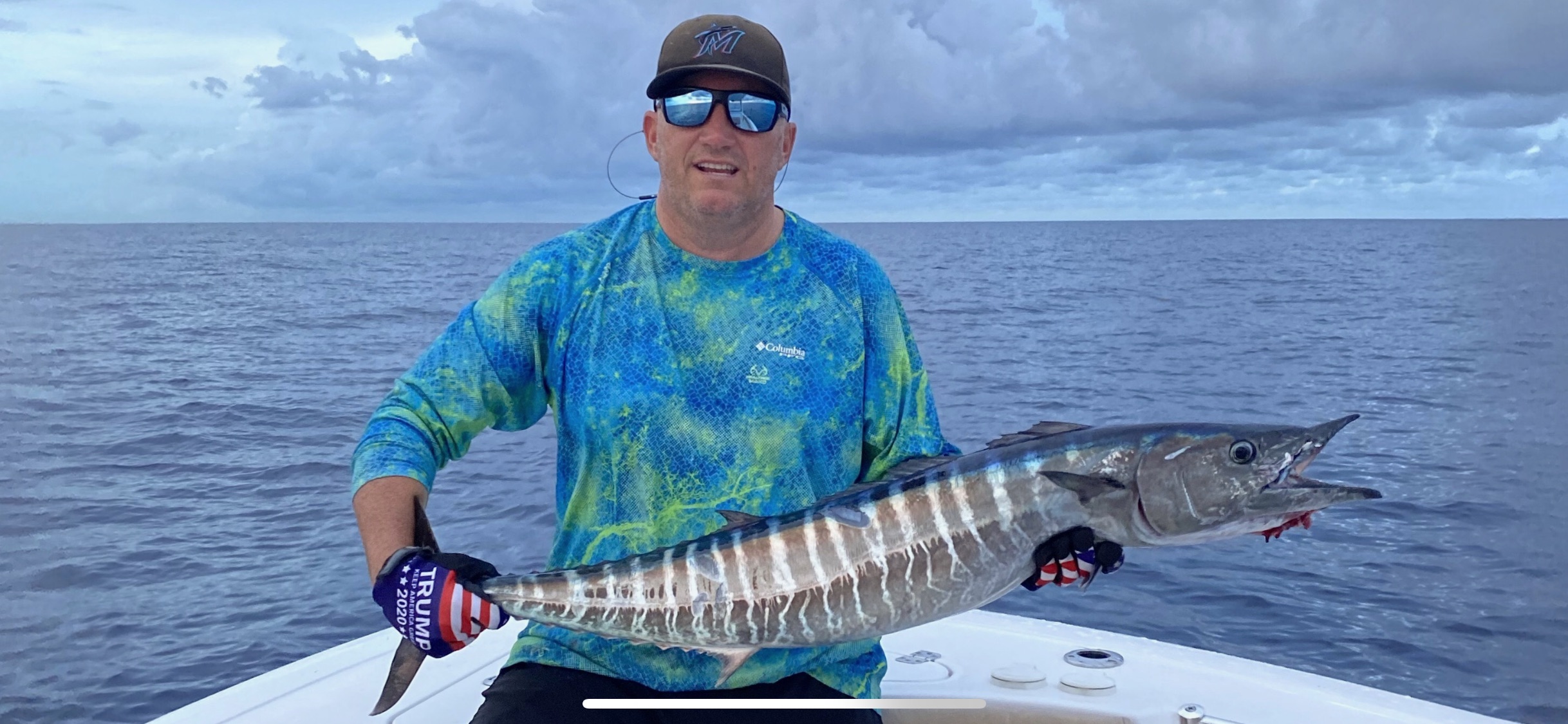
Kingfish are not always sitting directly on the reef, but reef lines, bait schools, and nearshore wrecks are prime places to find them. When kingfish are around, the bite can be fast and exciting. They are known for blistering first runs, airborne strikes, and enough speed to get every angler on the boat watching.
Live baits are a major part of kingfish fishing off Boynton Beach. A bait slow-trolled along a reef edge or suspended around active bait can get crushed without warning. Wire or a short trace is often needed because kingfish have sharp teeth, although too much hardware can reduce bites in clear water. It is always a balance between getting the bite and landing the fish.
Amberjack
Amberjack are reef bruisers. They gather around wrecks and serious structure, hit live baits with confidence, and fight all the way to the boat. A big amberjack is a full-body workout, especially when it starts circling beneath the boat late in the fight.
These fish are a strong option for anglers who want action more than a cooler full of fillets. They can be especially fun for groups of friends, experienced anglers, and anyone ready to pull on a fish that refuses to quit. Like grouper, amberjack regulations need to be checked before the trip because rules and harvest opportunities can change.
Cero and Spanish mackerel
Cero and Spanish mackerel add speed to a reef trip, particularly when bait is stacked on the surface or along the edge of a reef. They are smaller than kingfish, but they make up for it with aggressive strikes and quick action. They are a great fit for families and first-time anglers because a mackerel bite often keeps rods bending.
Small live baits, strips, and flashy offerings can all produce. The key is staying around active bait and being ready when fish move through. A mackerel school may only stay on a spot for a short time, so quick decisions matter.
Reading a South Florida Reef Instead of Just Fishing It
Not every reef holds fish the same way. Productive areas usually have a combination of hard bottom, ledges, wreckage, bait, and moving water. Current is one of the biggest pieces of the puzzle. Too little current can make fish sluggish. Too much can make it difficult to keep baits in the strike zone. A captain may change anchor position, drift angle, bait size, or depth until the presentation looks right.
Water clarity matters too. On clean, bright days, snapper can become leader-shy and demand a subtle approach. When the water has a little color or current is stronger, fish may feed more aggressively. Wind and sea conditions also shape the plan. A calm day can be ideal for anchoring and chumming a reef, while a breezier day may call for working a protected line, a wreck, or a more controlled drift.
That flexibility is what makes a private charter valuable. There is no need to force one technique all day. If yellowtail are chewing, stay with them. If the live bait starts getting nervous and kingfish are crashing nearby, shift gears. If the bottom bite turns on, put baits down for grouper or mutton snapper.
Choose the Right Trip Length for Reef Fishing
A half-day trip is a solid choice for families, visitors, and anglers who want to get right into local reef action without committing their entire day. With Gulf Stream water and productive reef grounds only miles from shore, there is no long offshore ride before the fishing starts.
A three-quarter-day trip gives more room to work through changing conditions. It is often the sweet spot for anglers who want to target snapper early, then spend time looking for kingfish, amberjack, or larger bottom fish. A full day provides the most flexibility, especially when the plan includes live-bait fishing, deeper structure, or a mix of reef and offshore targets.
The best choice depends on the group. First-time anglers may prefer a shorter trip with steady action and plenty of instruction. Dedicated anglers often appreciate the extra time to wait out a tide change or move between several productive areas.
How to Get More From Your Reef Charter
Come ready to listen, especially during the first few minutes around a spot. A small adjustment in how you hold the rod, feed line, or set the hook can make a major difference on snapper and grouper. Let the captain know whether your group wants the best eating fish available, the hardest fight, a mix of both, or a kid-friendly action trip.
Bring sun protection, polarized sunglasses, a hat, and anything you need for comfort on the water. The fishing gear and tackle should already be handled, so guests can focus on the fun part - watching a rod load up and putting fish in the boat. If you are planning to keep legal fish, ask how the day's conditions may affect the best target species.
Captain Jim at 4 J's Fishing Charters has spent decades learning these local waters, from subtle reef edges to the way bait and current set up off Boynton Beach. That local experience helps put anglers right on the fish without wasting valuable time guessing.
The reef does not hand out guarantees, and that is part of what keeps it interesting. But with a flexible plan, proper tackle, and a captain who knows when to change the program, a South Florida reef trip can deliver the kind of bite your group will be talking about long after the last fish is iced down.


Comments